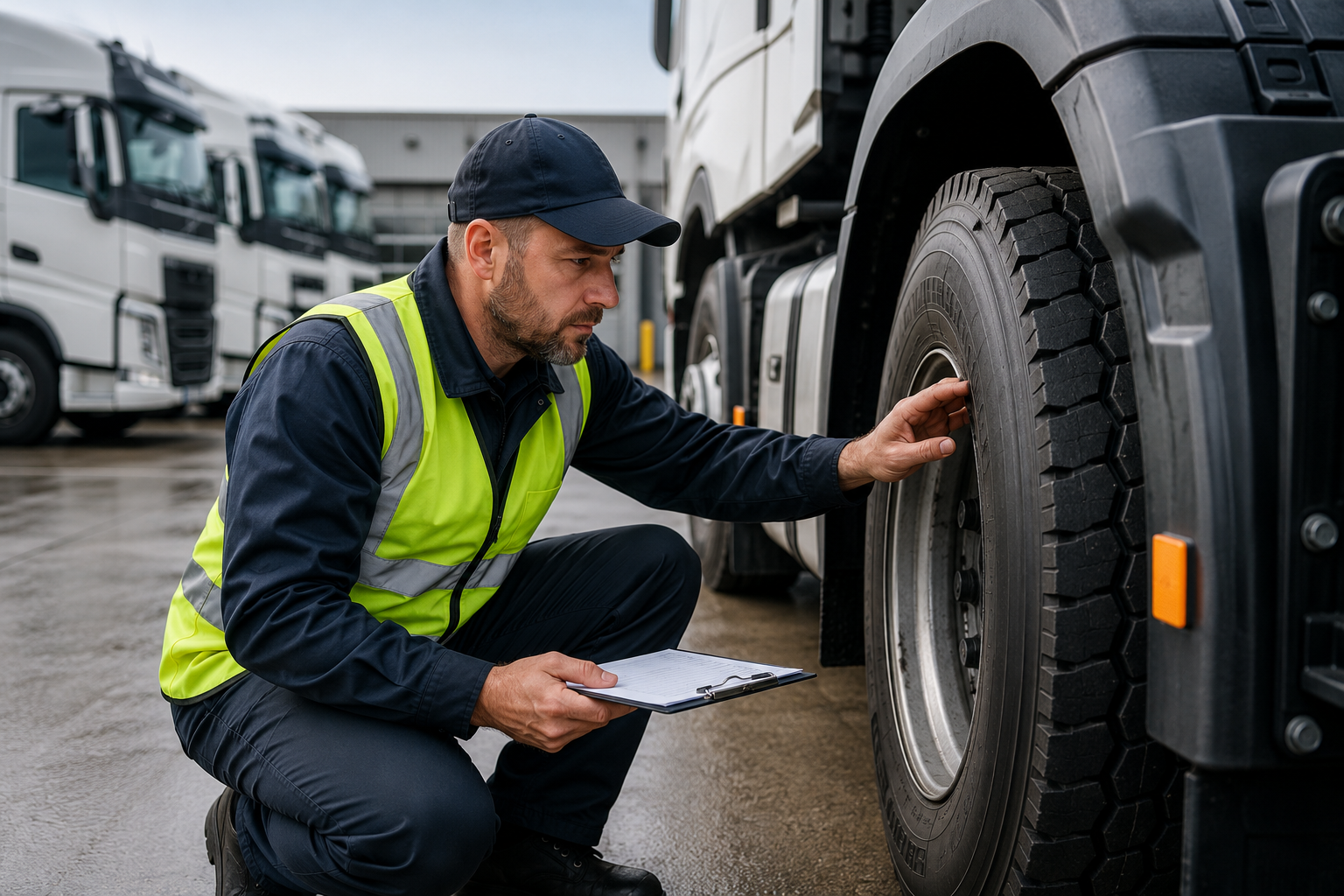
Tyre inspections are essential for commercial fleets because they improve road safety, reduce fuel costs, extend tyre life, prevent breakdowns, and ensure legal compliance. Regular inspections identify worn tread, incorrect tyre pressure, and tyre damage early, helping keep vehicles safe, reliable, and on the road.
Running a commercial fleet involves balancing operational efficiency, driver safety, customer satisfaction, and legal responsibilities. While engines, brakes, and transmissions often receive significant attention, tyres deserve equal importance.
Commercial vehicles typically travel thousands of miles every month under varying weather conditions, carrying heavy loads and operating on different road surfaces. These demanding conditions naturally accelerate tyre wear.
Routine tyre inspections help identify small issues before they become expensive or dangerous problems.
Regular inspections help fleet operators:
- Improve road safety
- Reduce operating expenses
- Increase tyre lifespan
- Lower fuel consumption
- Avoid unexpected downtime
- Maintain legal compliance
- Protect company reputation
Ignoring tyres until they fail is one of the most expensive maintenance strategies any fleet can adopt.
Tyres Are Your Fleet’s First Line of Safety
Every aspect of vehicle performance depends on the condition of its tyres.
Healthy tyres provide:
- Maximum grip
- Shorter braking distances
- Better steering control
- Improved cornering stability
- Enhanced wet weather performance
Worn or damaged tyres significantly reduce vehicle control, especially during emergency braking or poor weather.
A simple inspection can reveal hidden issues before they compromise driver safety.
Preventing Costly Roadside Breakdowns
Commercial vehicle breakdowns are expensive.
When a tyre fails unexpectedly, businesses often face:
- Recovery charges
- Missed deliveries
- Driver delays
- Customer complaints
- Emergency tyre replacement costs
- Lost productivity
Routine tyre inspections identify:
- Slow punctures
- Embedded objects
- Sidewall damage
- Bulges
- Uneven wear
- Low tyre pressure
Repairing these issues early is far cheaper than dealing with a roadside emergency.
Improving Fuel Efficiency
Tyres have a direct impact on fuel economy.
Underinflated tyres create greater rolling resistance, meaning the engine must work harder to move the vehicle.
Even slightly incorrect tyre pressures can increase fuel consumption across an entire fleet.
Proper tyre inspections ensure:
- Correct inflation
- Even tyre wear
- Reduced rolling resistance
- Better engine efficiency
Over the course of a year, maintaining correct tyre pressure can save businesses thousands of pounds in fuel costs.
Extending Tyre Lifespan
Commercial tyres represent a significant operating expense.
Replacing tyres too frequently increases maintenance budgets unnecessarily.
Routine inspections help maximise tyre life by identifying issues such as:
Incorrect Inflation
Tyres that are overinflated or underinflated wear unevenly.
Wheel Alignment Problems
Misaligned wheels cause rapid shoulder wear.
Suspension Faults
Damaged suspension components often create irregular tyre wear patterns.
Wheel Balancing Issues
Unbalanced wheels cause vibration and uneven tread wear.
Correcting these problems early helps tyres reach their full expected lifespan.
Reducing Fleet Downtime
Every hour a commercial vehicle spends off the road affects profitability.
Scheduled tyre inspections minimise unexpected repairs by detecting wear before failure occurs.
Benefits include:
- Better route planning
- Fewer emergency repairs
- Increased vehicle availability
- Improved delivery performance
Preventive maintenance always costs less than reactive repairs.
Ensuring Legal Compliance
Commercial fleets in the UK must comply with strict tyre regulations.
Vehicles with unsafe tyres may fail inspections and can result in:
- Fines
- Penalty points
- Vehicle prohibitions
- Insurance complications
- Operator licence risks
Routine inspections help ensure tyres remain within legal limits.
Important checks include:
- Minimum tread depth
- Tyre condition
- Inflation levels
- Visible damage
- Load ratings
Maintaining legal tyres protects both the business and its drivers.
Improving Driver Confidence
Drivers naturally perform better when operating well-maintained vehicles.
Knowing tyres have been professionally inspected gives drivers confidence during:
- Long-distance journeys
- Motorway driving
- Heavy rainfall
- Winter conditions
- Emergency manoeuvres
A confident driver is usually a safer driver.
Protecting Heavy Loads
Commercial vehicles often carry expensive goods.
A tyre failure while transporting valuable cargo can result in:
- Damaged products
- Delayed deliveries
- Financial losses
- Dissatisfied customers
Regular tyre inspections reduce the likelihood of load damage caused by tyre-related incidents.
Detecting Uneven Wear Patterns
Uneven tyre wear provides valuable information about vehicle health.
Different wear patterns often indicate different mechanical issues.
Examples include:
Centre Wear
Usually caused by overinflation.
Edge Wear
Often indicates underinflation.
One-Sided Wear
Frequently caused by poor wheel alignment.
Cupping
May suggest suspension or balancing problems.
Spotting these patterns early prevents further mechanical damage.
Enhancing Wet Weather Performance
British weather can change quickly.
Heavy rain significantly reduces tyre grip.
Tyres with adequate tread depth disperse water efficiently, reducing the risk of aquaplaning.
Routine inspections help ensure tyres remain effective in wet conditions.
Supporting Environmental Sustainability
Well-maintained tyres contribute to lower emissions.
Reduced rolling resistance means:
- Lower fuel usage
- Reduced CO₂ emissions
- Improved environmental performance
Many businesses now include tyre management as part of their sustainability strategy.
Lowering Overall Maintenance Costs
Fleet managers often focus on major mechanical repairs while overlooking tyre maintenance.
However, neglected tyres frequently contribute to:
- Brake wear
- Suspension damage
- Steering issues
- Increased fuel costs
Routine inspections reduce the likelihood of these secondary repairs.
Improving Fleet Reliability
Reliable fleets build stronger customer relationships.
Businesses with dependable vehicles experience:
- Better delivery times
- Higher customer satisfaction
- Improved reputation
- Greater operational efficiency
Tyre inspections are one of the simplest ways to improve overall reliability.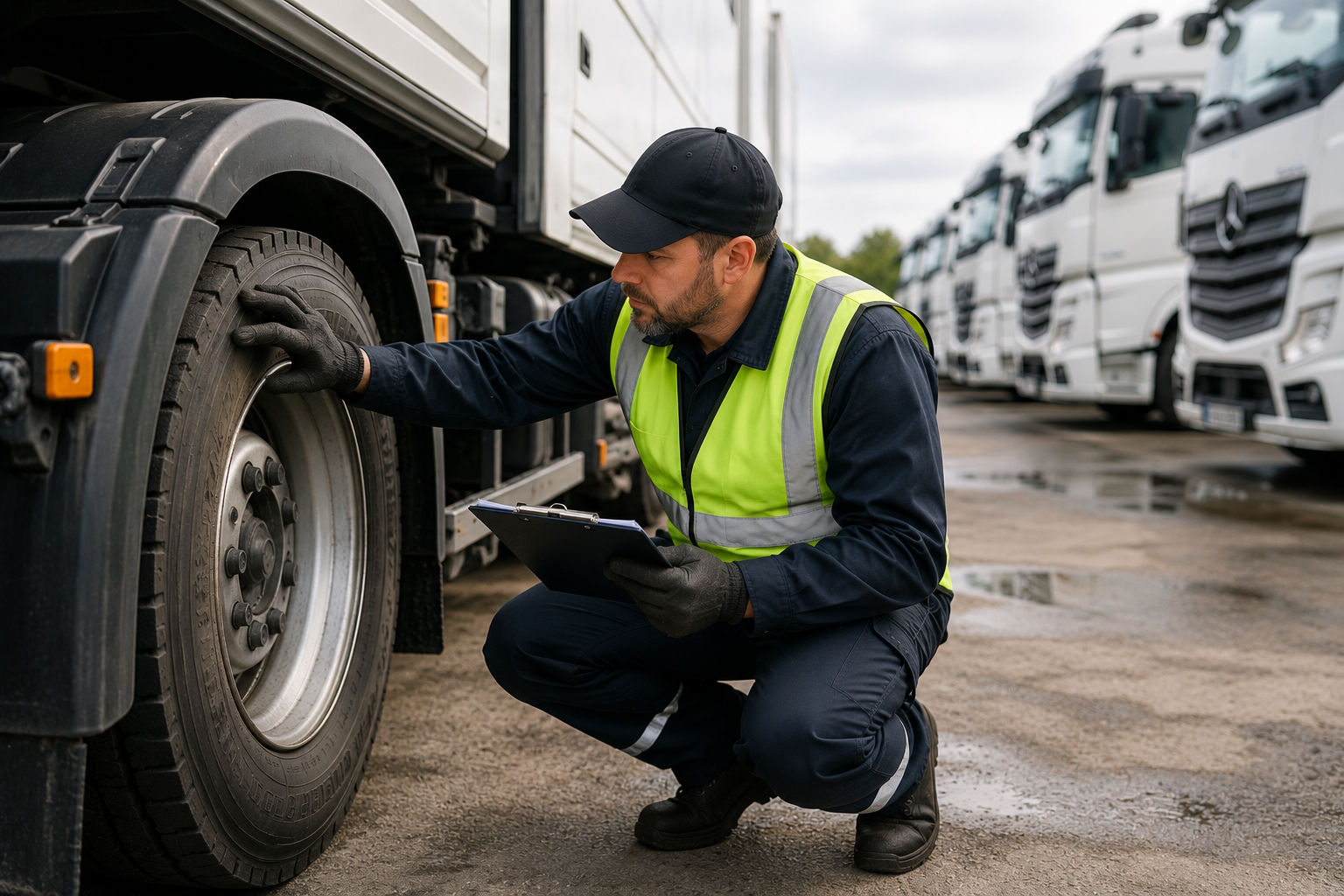
What Should a Commercial Tyre Inspection Include?
A comprehensive inspection should cover several critical areas.
Tread Depth
Ensure tread remains above the legal minimum while monitoring for uneven wear.
Tyre Pressure
Check against manufacturer recommendations.
Sidewall Condition
Look for:
- Cuts
- Bulges
- Cracks
- Impact damage
Valve Condition
Damaged valves can slowly leak air.
Embedded Objects
Remove nails, screws, or sharp debris before punctures worsen.
Wheel Alignment
Inspect for signs of uneven wear indicating alignment issues.
Wheel Balance
Check for vibrations that may indicate balancing problems.
Tyre Age
Older tyres may require replacement despite having sufficient tread.
How Often Should Commercial Fleet Tyres Be Inspected?
Inspection frequency depends on:
- Mileage
- Vehicle type
- Load weight
- Operating conditions
- Distance travelled
Many fleet operators perform:
- Daily driver walkaround checks
- Weekly visual inspections
- Monthly detailed tyre inspections
- Full maintenance inspections during scheduled servicing
High-mileage vehicles may require more frequent checks.
Driver Daily Tyre Checks
Drivers play an important role in tyre safety.
Daily inspections should include:
- Visible damage
- Low pressure
- Objects in tread
- Cuts
- Bulges
- Tread condition
These simple checks take only a few minutes but significantly reduce risks.
Technology Is Improving Fleet Tyre Management
Modern fleets increasingly use technology to monitor tyre health.
Popular systems include:
- Tyre Pressure Monitoring Systems (TPMS)
- Digital fleet management software
- Automated inspection reports
- Predictive maintenance systems
These tools allow fleet managers to identify issues before they become serious.
Creating a Preventive Tyre Maintenance Programme
An organised tyre maintenance programme improves consistency.
Key steps include:
Maintain Inspection Records
Track wear patterns and replacement history.
Train Drivers
Educate staff on recognising tyre issues.
Schedule Regular Inspections
Avoid relying solely on annual servicing.
Rotate Tyres
Promote even wear across all wheels.
Monitor Tyre Pressures
Use calibrated equipment for accurate readings.
Replace Tyres Before They Become Unsafe
Avoid waiting until tyres reach the legal minimum.
The Financial Benefits of Routine Tyre Inspections
Businesses often underestimate how much tyre management affects profitability.
Routine inspections help reduce:
- Fuel expenses
- Emergency repairs
- Vehicle downtime
- Recovery charges
- Replacement tyre costs
- Insurance claims
Across large commercial fleets, these savings can amount to many thousands of pounds annually.
Partnering with Professional Vehicle Inspection Services
Professional inspections provide a higher level of accuracy than visual checks alone.
Experienced inspectors understand:
- Commercial vehicle regulations
- Fleet maintenance standards
- Tyre wear analysis
- Roadworthiness requirements
Working with trusted specialists such as National Vehicle Inspection helps businesses maintain safer, more reliable fleets while ensuring inspections are completed thoroughly and consistently.
Conclusion
Tyre inspections are one of the simplest yet most valuable investments any commercial fleet operator can make. They improve safety, reduce operating costs, extend tyre life, increase fuel efficiency, and minimise unexpected breakdowns. By identifying small problems before they develop into major failures, regular inspections keep vehicles on the road, protect drivers, and help businesses meet their legal obligations.
For fleet operators seeking long-term reliability and lower maintenance costs, proactive tyre inspections should never be viewed as optional. Instead, they should be an essential part of every vehicle’s routine maintenance programme.